



APPLICATION DESCRIPTION
Introduction
Learn more about applications using E Ink.
E Ink Prism™ color-changing ePaper can be cut into custom shapes, conform to three-dimensional surfaces, and integrate with various substrates and building materials. It enables walls, wall panels, tiles, and building façades to change colors and patterns according to different design needs. By reflecting ambient light, ePaper creates a natural, soft visual appearance and consumes power only when the image changes. This preserves the tactile quality of physical materials while giving surfaces the ability to evolve continuously.
Imagine a building façade that shifts between lighter and darker tones with the seasons—using lighter colors in summer to reduce heat absorption and darker colors in winter. Bathroom floor tiles could change patterns according to the user’s preferences, while walls could take on the appearance of stone or wood grain without requiring building materials to be repeatedly removed and replaced. From homes and commercial spaces to large-scale architectural façades, ePaper allows design to remain adaptable beyond project completion, evolving with time, events, and changing needs.
When combined with sensors, sound, and lighting, ePaper can also enable walls to respond to people and their surroundings, transforming them into public art or interactive installations. More than a display added to a building, ePaper can become an integral part of spatial design, opening up new possibilities for architectural surfaces through low power consumption, personalization, and material aesthetics.
Application Example
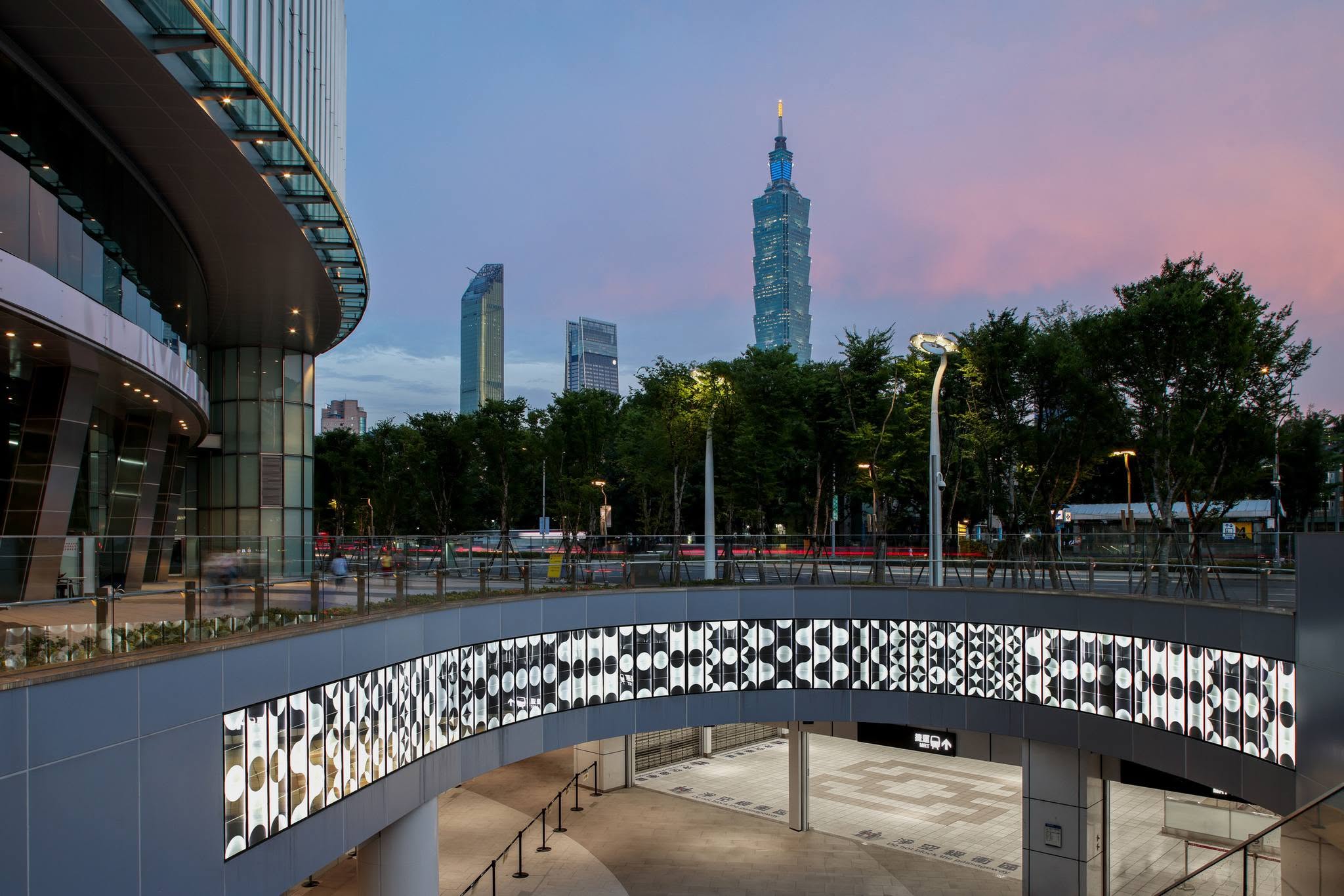
Taipei Dome — Light and Sound Waves
Created by noiseKitchen Art, Light and Sound Waves draws inspiration from the “wave of passionate cheers” surrounding a stadium. Using a minimalist black-and-white palette and rhythmic geometric forms, the installation transforms the constantly changing action on the field into abstract visual sequences. Sound elements add a sense of speed and motion, while the interactive light-and-sound design captures the excitement and roaring energy inside the stadium, allowing visitors outside to experience an immersive combination of visuals and sound.